3 Things I Loved, August 2026
Since I have this space, I want to keep a record of the things I loved each month. It can be a book, a movie, a song, an album, a manga series, something I saw on TV, or heard, a new recipe I tried, a dish I ate, or even a material object. Why? Because it’s fun to talk and read about beloved things!
So, in August 2026, I got really into:
1. Dogs throughout history
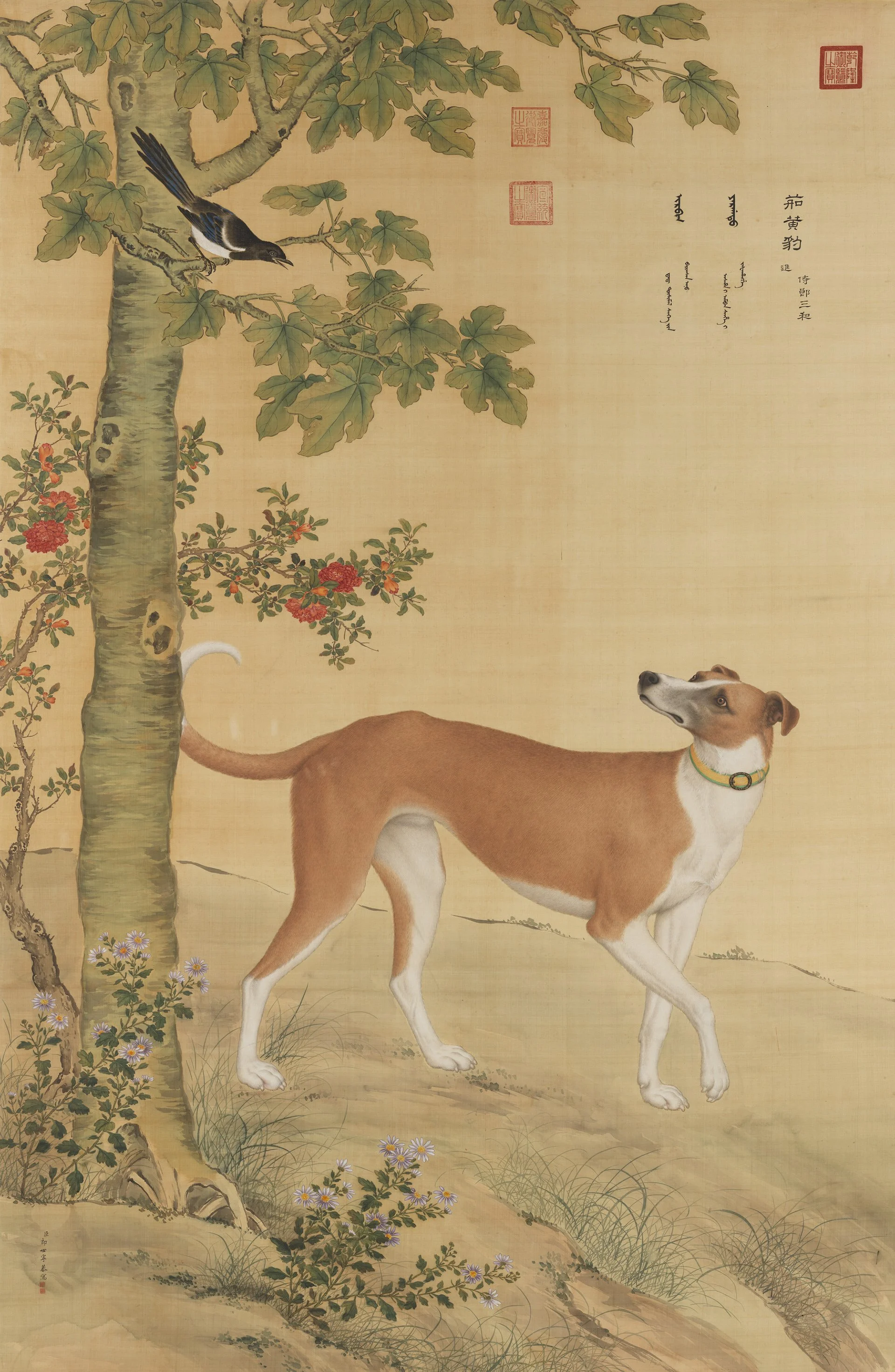
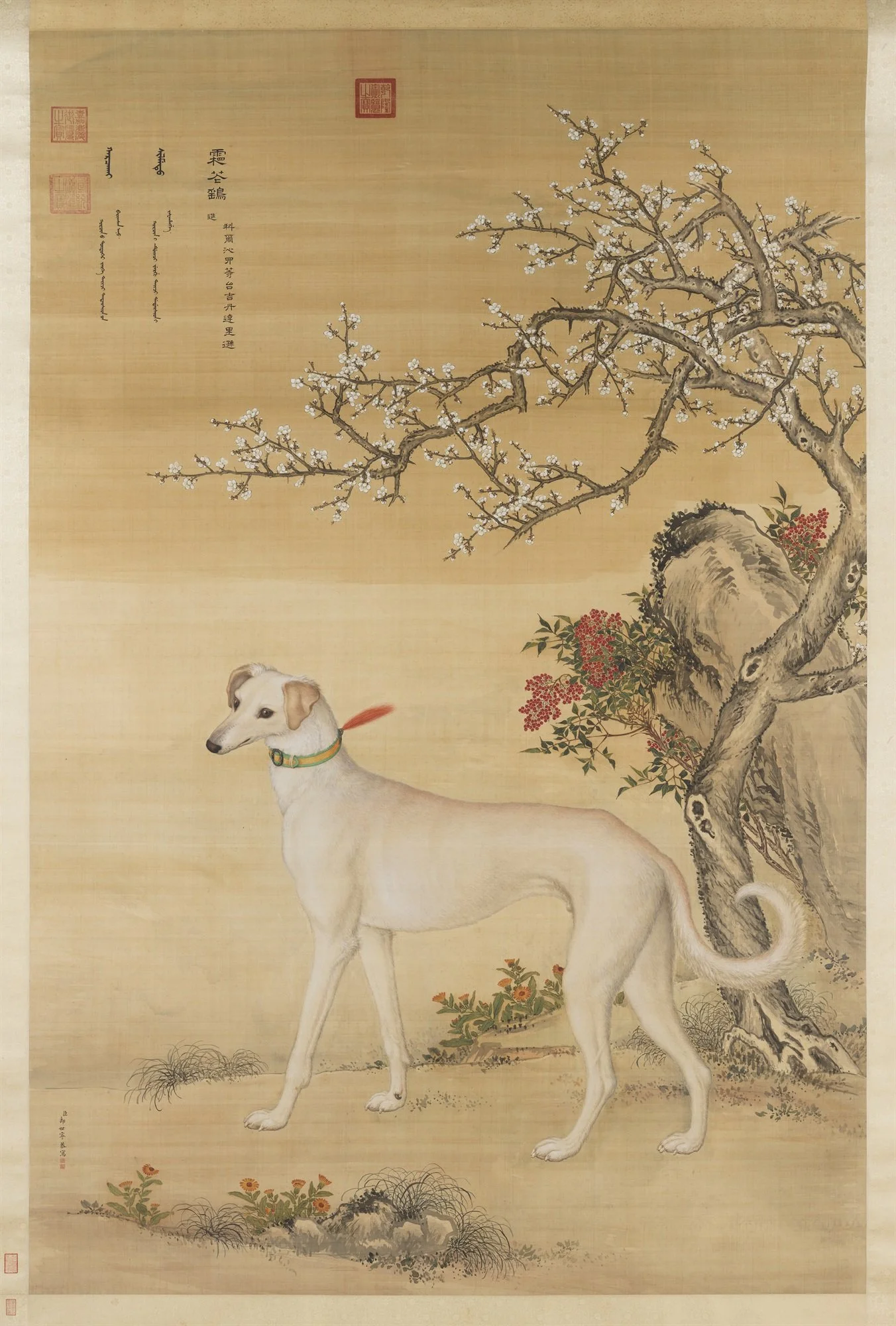
I recently learned that August is the month of International Dog Day (and also, coincidentally, my own dog’s adoption anniversary), which might explain why I happened upon so much material on dogs this month. The one that stood out most to me is a collection of painted scrolls from China titled 10 Prized Dogs, painted by an Italian Jesuit missionary to China in the 18th century.
I was struck by the Western-style realism of the art mixed with traditional Chinese elements in the background, and how beautifully the dogs had been rendered. The scrolls, all housed in the National Palace Museum in Taiwan, are huge— over 240 cm tall and about 165 cm wide. Considering the physical magnitude of the paintings and the dogs themselves—their fine collars, elegant fanciful names/epithets (Frost Flower Hawk! Tawny Yellow Leopard! Star-Gleaming Wolf!!), their regal postures, refined expressions, and the efforts the artist took to highlight their individual qualities— certainly these dogs were prized, but they must also have been loved.
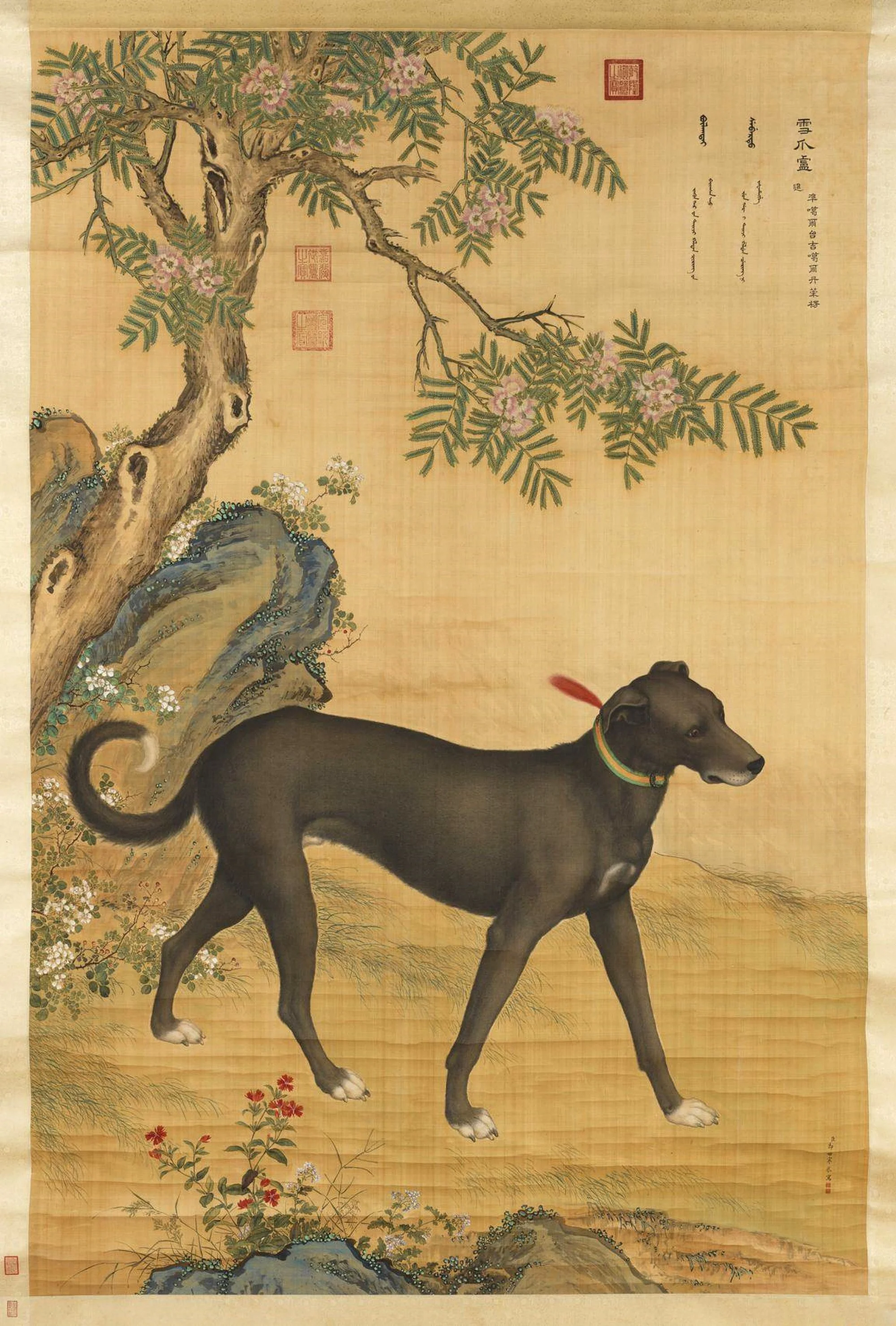
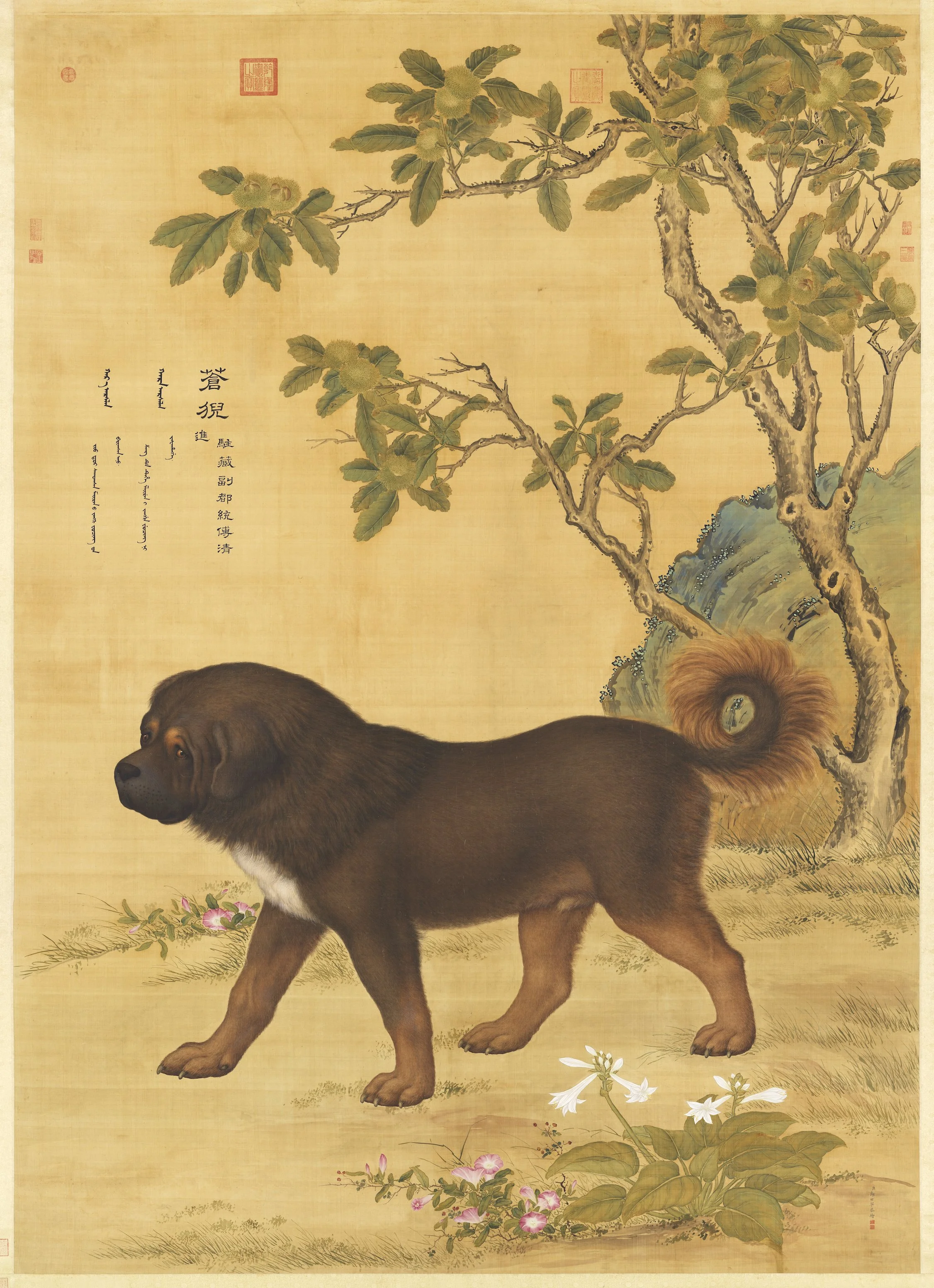
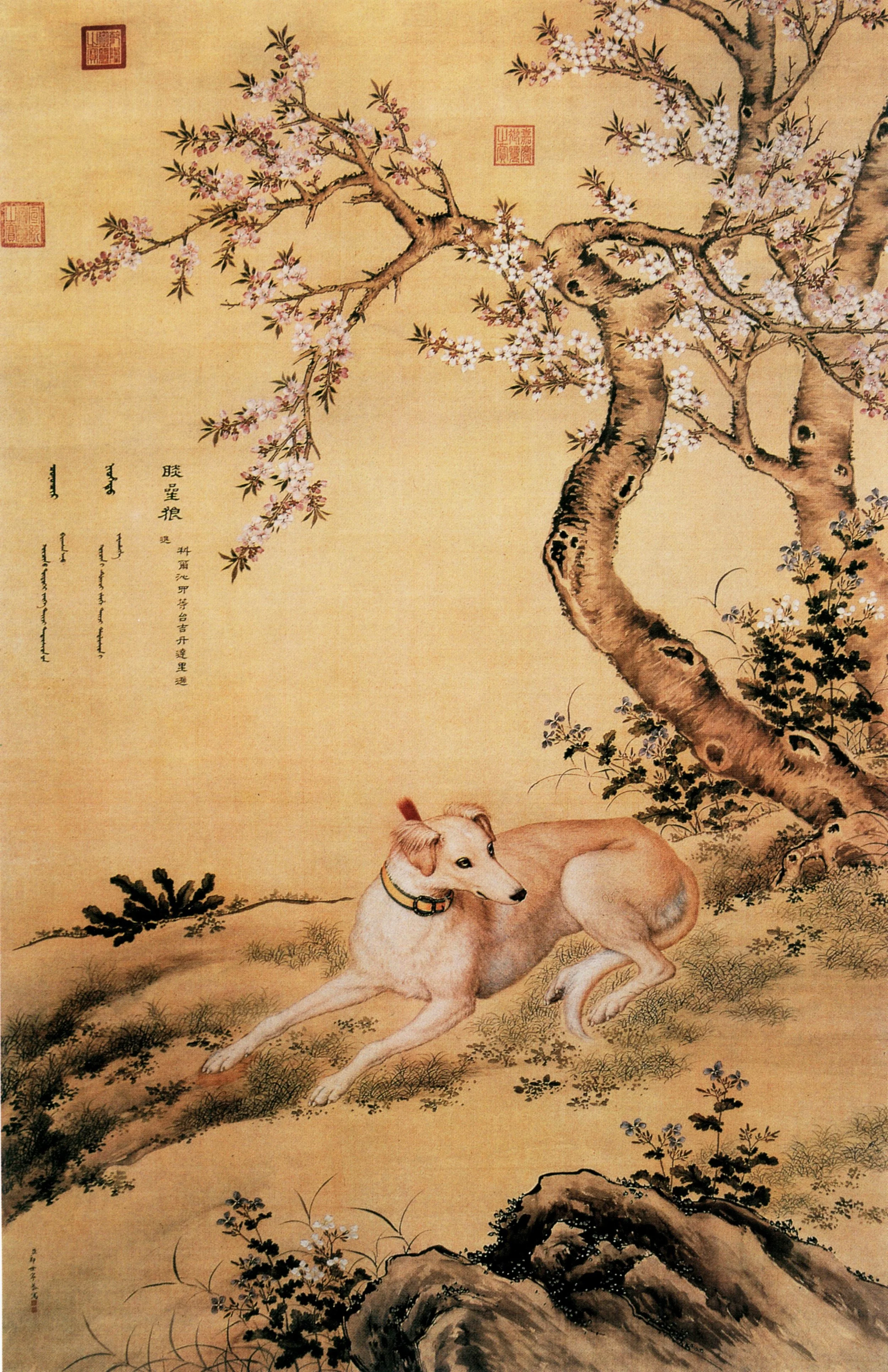
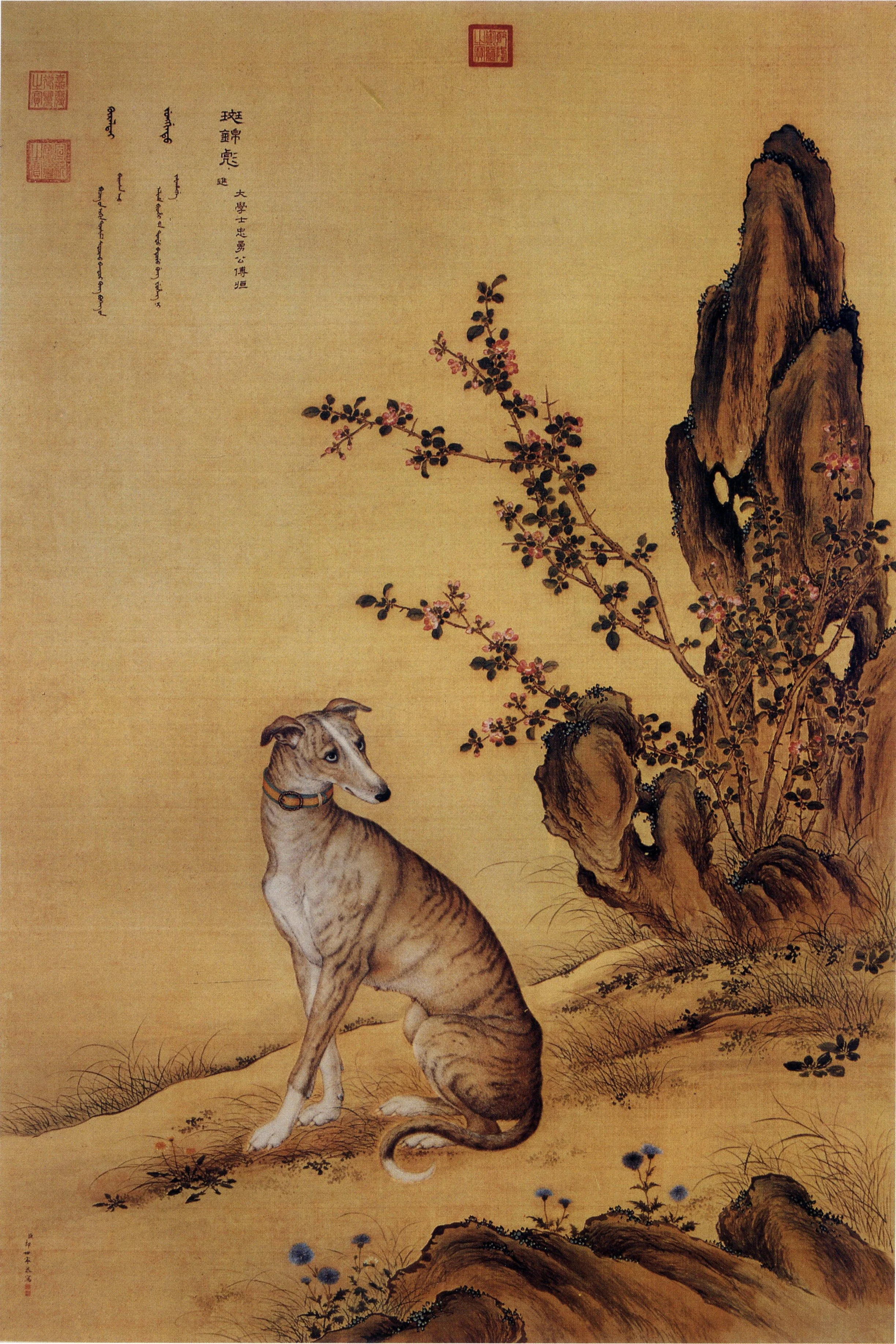
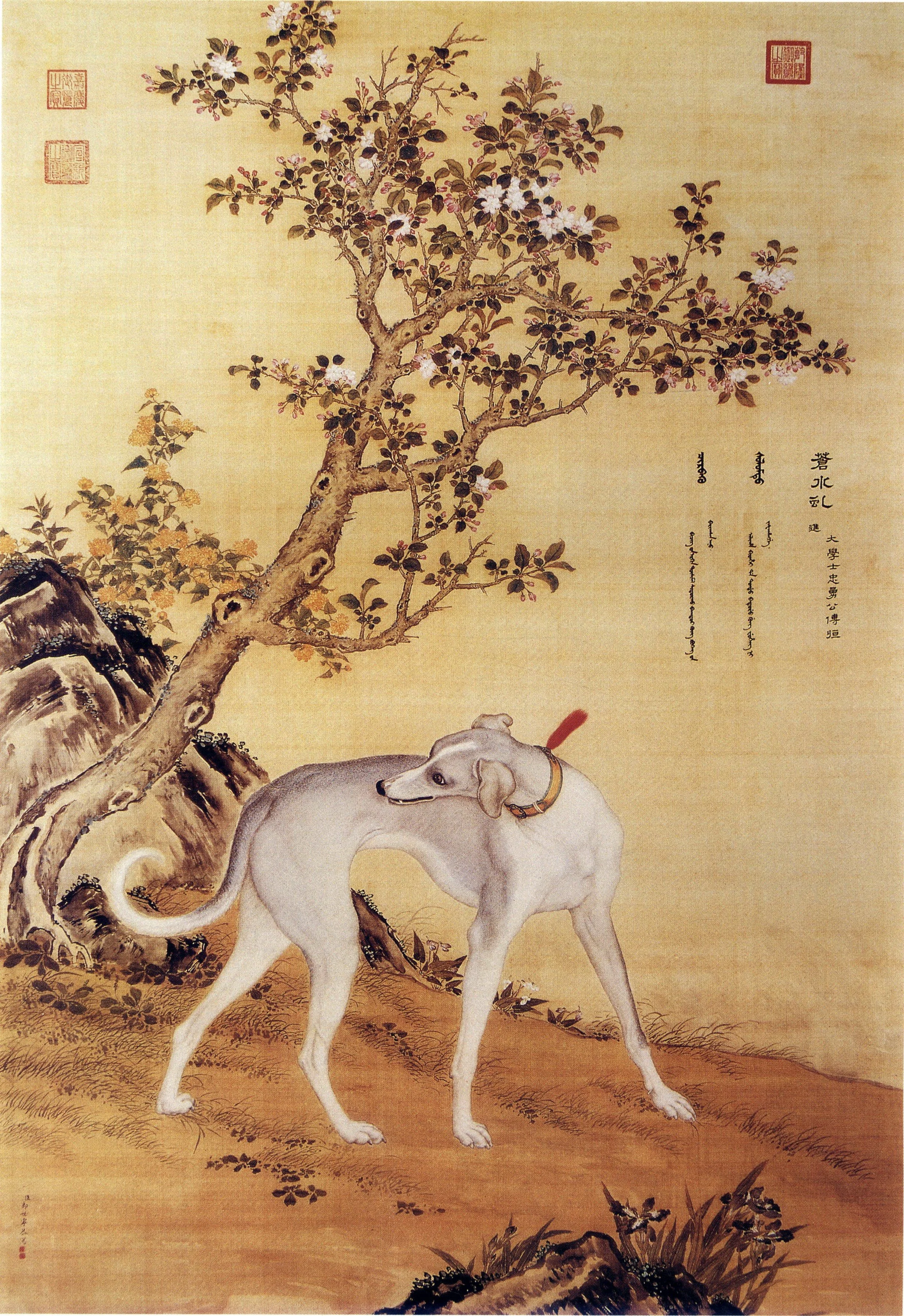
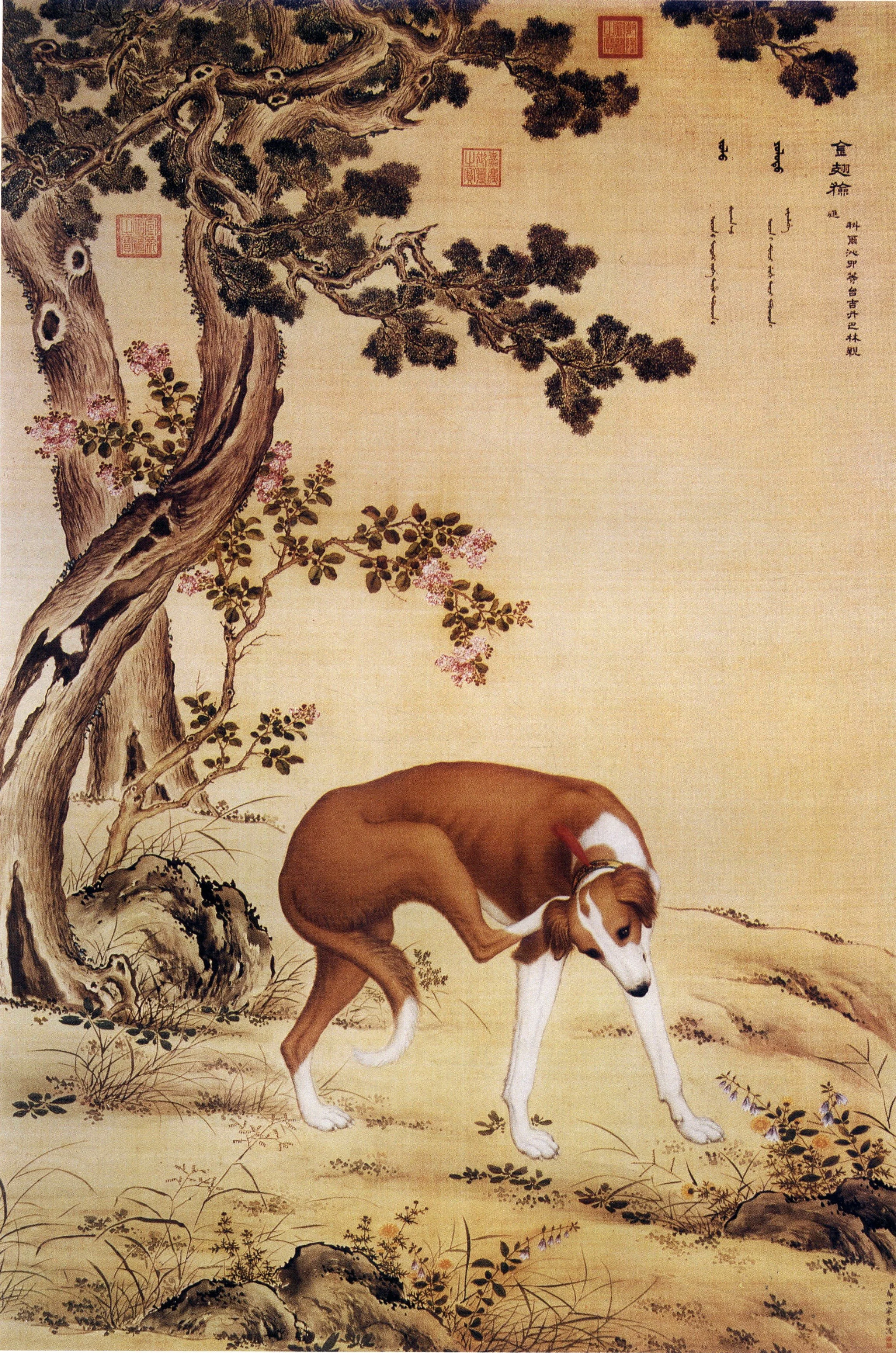
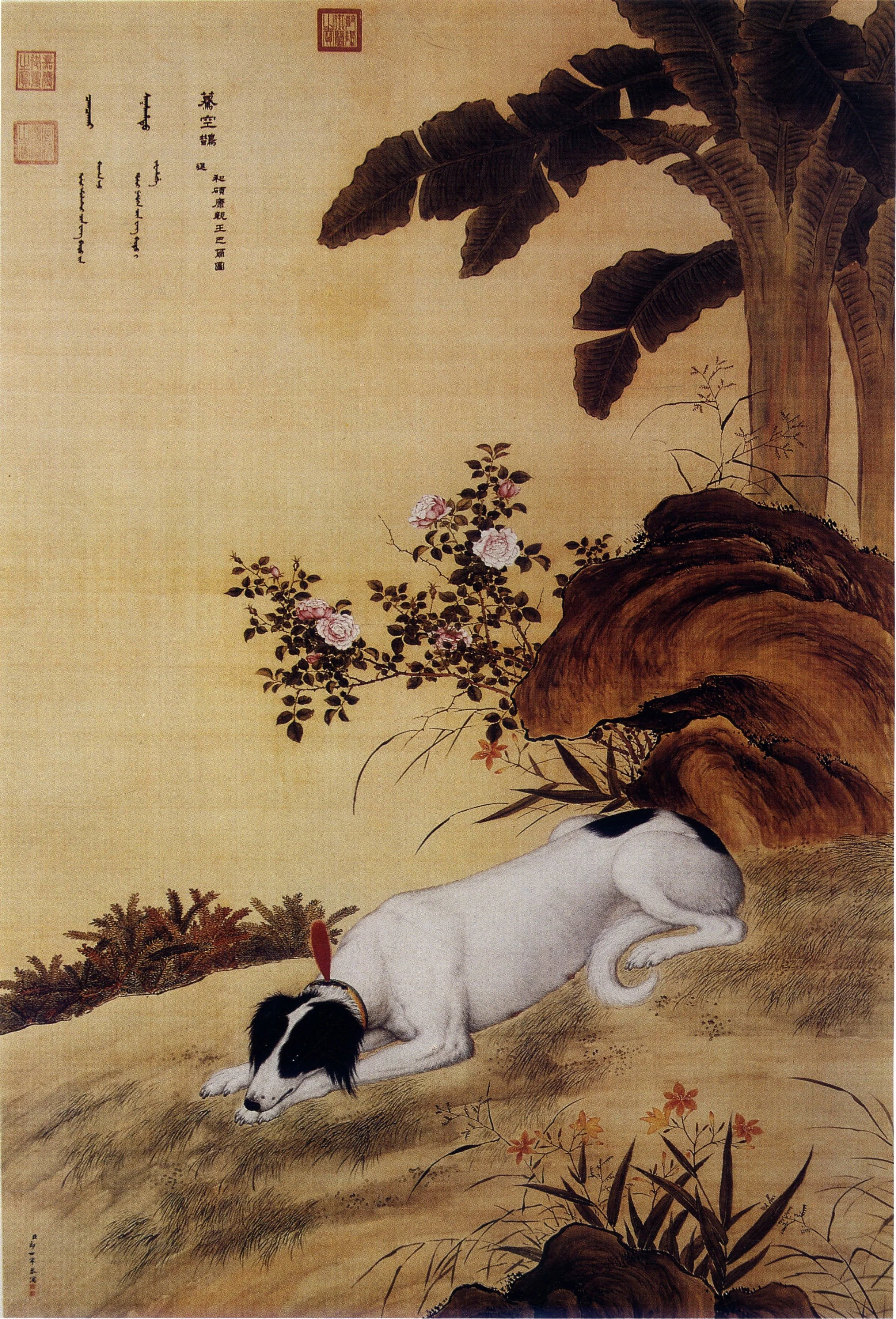
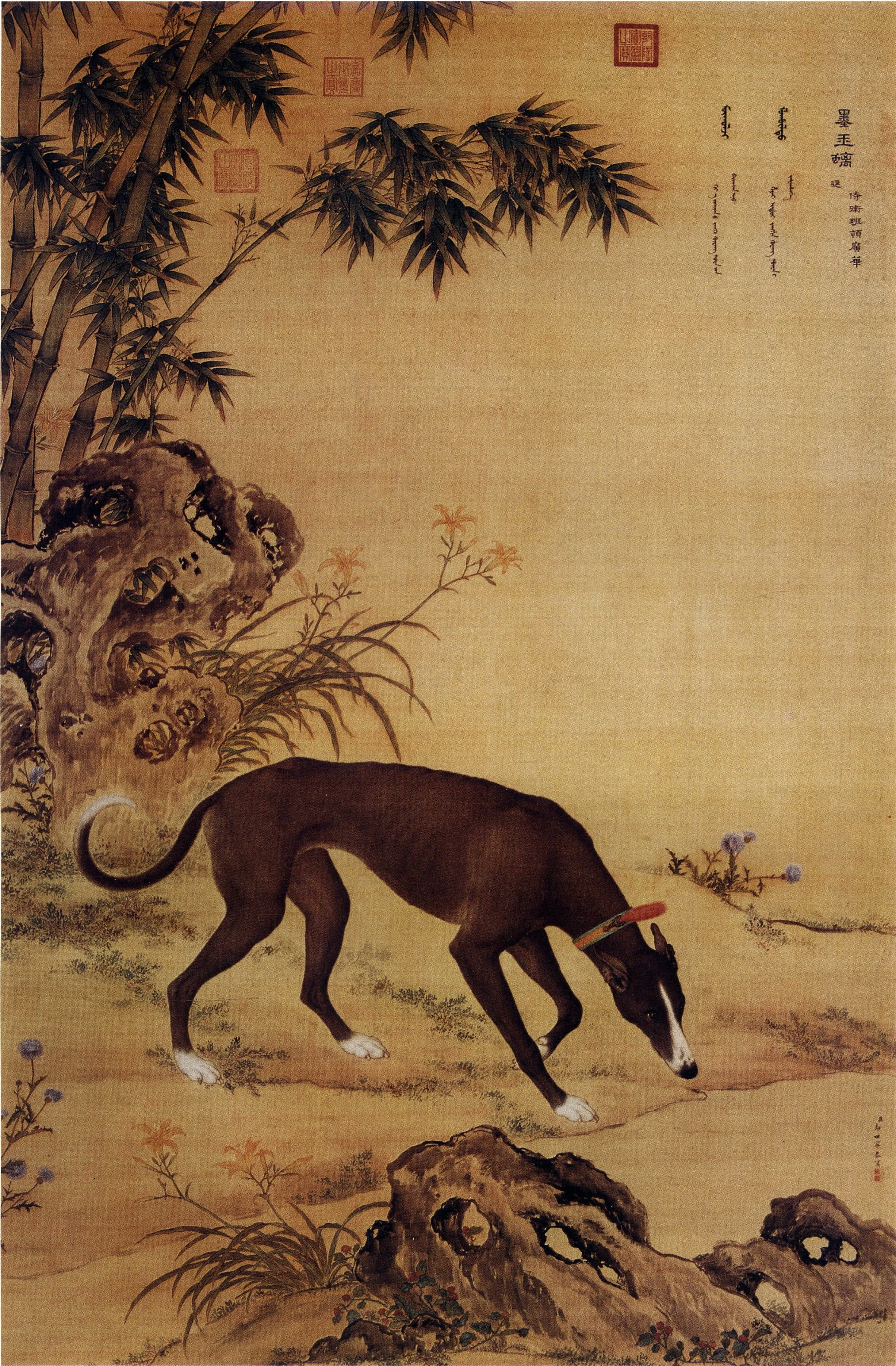
Probably because I spent an afternoon on Google researching these dog paintings, Youtube also began to show me videos of dogs throughout medieval history. This one in particular talked about the “unbelievable thing” these medieval people did when their dogs died, which seemed to be setting up the expectation of some scandalising inhumane thing like perhaps consuming them or something, but what the bereaved owners really did was: they mourned them.
Of course they did!
I’ve always wondered at our reluctance to believe that humans in past history could be capable of the same emotion and sentiments as us. Maybe because it makes it harder to accept the awful things that happened to them, or that they inflicted upon others. Okay sure, perhaps they weren’t dressing their dogs in clothes and throwing them birthday parties (or were they?), but they loved their dogs, something that is most clearly on display when they lost them.
These people mourned their dogs when they died; in their grief they built them tombs and wrote them elegies. In fact, poetry from Georgian England and carved epitaphs in Ancient Rome share the same sentiments as those you might see penned by any bereaved dog owner on Instagram today.
For example, from Ancient Rome:
“Bedewed with tears I have carried you, our little dog, as in happier circumstances I did fifteen years ago. So now, Patrice, you will no longer give me a thousand kisses, nor will you be able to lie affectionately round my neck. You were a good dog, and in sorrow I have placed you in a marble tomb, and I have united you forever to myself when I die.”
And from the 12th century:
“You were laughter when you were alive, but look at the grief when you have died! Whoever saw you, whoever knew you, loved you and grieves now over your demise.”
No matter how many times I read these centuries-old words, I am moved to tears. Timely also that Christopher Nolan’s The Odyssey (which I didn’t want to watch because I was dreading precisely this scene) has been in cinemas and drawing attention to the devotion and the death of one very good historical dog: Argos. The film leaves it out, but I had always been struck by this detail Homer included in their reunion. From the Fagles translation:
But the moment he sensed Odysseus standing by / he thumped his tail, nuzzling low, and his ears dropped / though he had no strength to drag himself an inch / toward his master.
Anyone who lives with a dog or is very familiar with them knows the dropped, folded back ears: it is a gesture of both good manners and unabashed joy, most commonly seen when a dog greets someone they adore. Perhaps the film didn’t depict this because they didn’t think many viewers would get it, or would misread it as fear, or maybe the dog actor simply wasn’t capable of dropping his ears on demand, but what matters is that Homer did. For that long and even longer before that, humans had been loved by dogs, and loved them enough to read their body language and recognise the love in it.
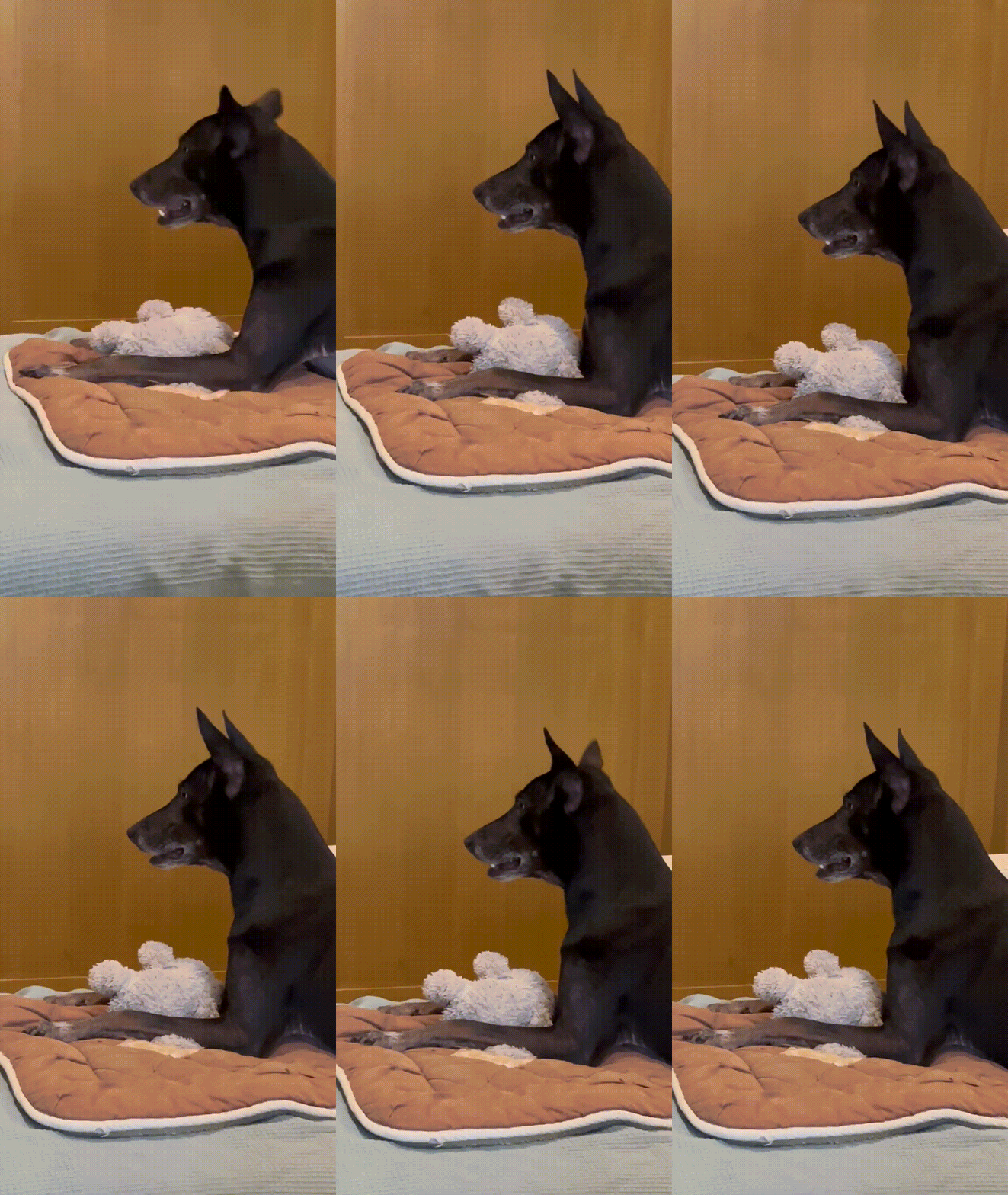
My dog, wanting desperately to drop her ears to greet my husband but is foiled each time by how long he takes to come up the stairs…
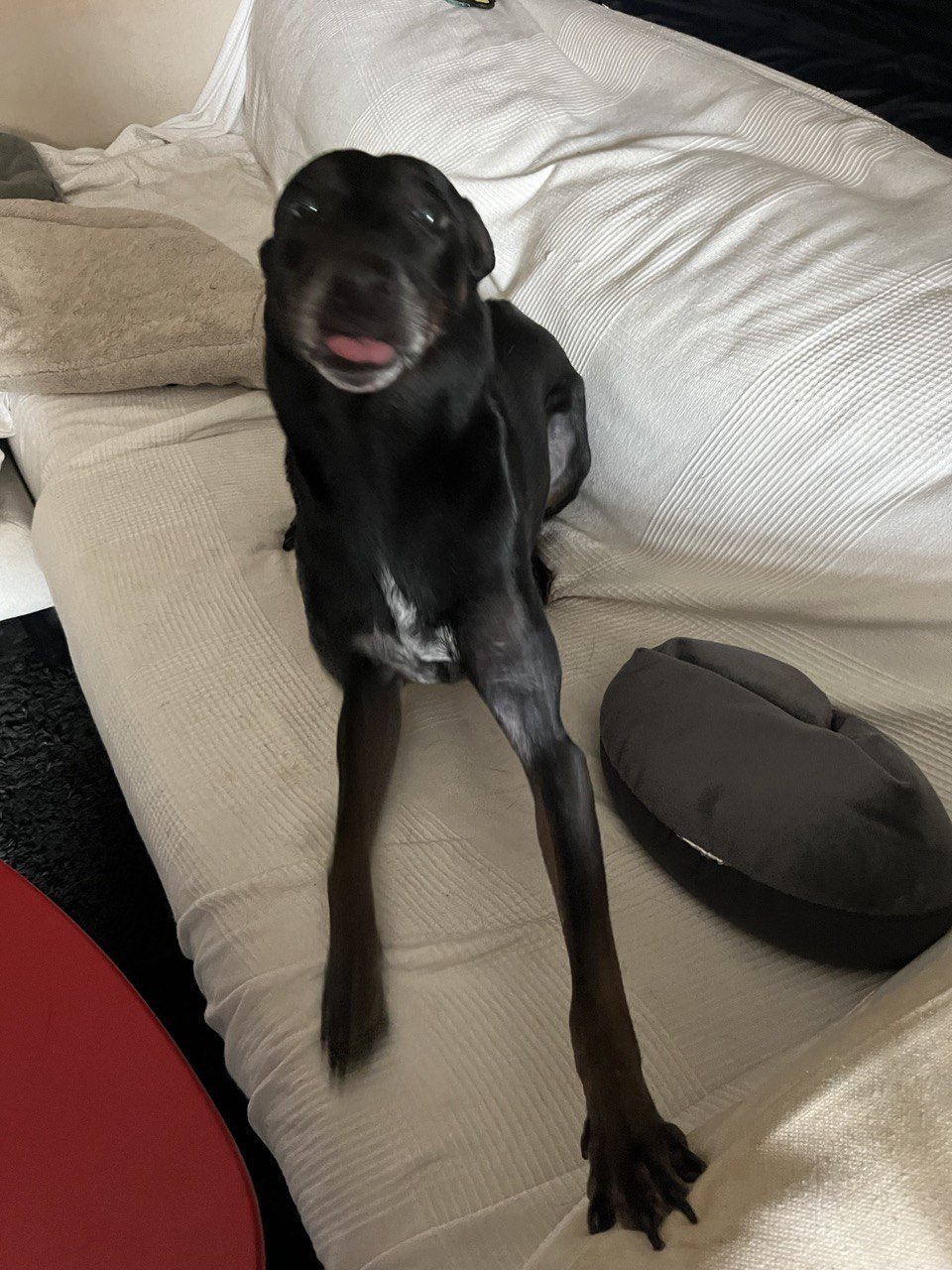
And finally, at the pinnacle of reunion joy, having fully achieved what we call “no ears”.
2. A very nifty knitting tool
Knitting and technology go hand in hand, because knitting is technology. For so much of history, in so many places, knitting and other fibrework technology — and the resulting textiles and items they produced— was important. Important enough that computing grew directly out of it, and important enough that blessings and prayers for protection have been knitted, weaved, and sewn into garments across the world.
On this topic, Ursula K. Le Guin always comes to mind:
Technology is the active human interface with the material world.
But the word is consistently misused to mean only the enormously complex and specialised technologies of the past few decades, supported by massive exploitation both of natural and human resources.
This is not an acceptable use of the word. “Technology” and “hi tech” are not synonymous, and a technology that isn't “hi,” isn’t necessarily '“low” in any meaningful sense.
We have been so desensitized by a hundred and fifty years of ceaselessly expanding technical prowess that we think nothing less complex and showy than a computer or a jet bomber deserves to be called “technology” at all. As if linen were the same thing as flax — as if paper, ink, wheels, knives, clocks, chairs, aspirin pills, were natural objects, born with us like our teeth and fingers — as if steel saucepans with copper bottoms and fleece vests spun from recycled glass grew on trees, and we just picked them when they were ripe...
Even so. Even so!! I could not help my mind being blown by this nifty online tool by Asunder. It lets you plot out a knitting chart like you might do in an Excel sheet, which is cool enough, but then uses that chart to create a rotating 3-dimensional simulation of how the finished fabric will turn out. WHAT?? And it’s free and it lives in your browser! Isn’t that unbearably cool??
Using it, I was able to confirm my suspicion of why the self-drafted cabled book sleeve I was knitting was cinching in at the body, and I was even able to test the solution of adding a row of increase stitches before the cables start.
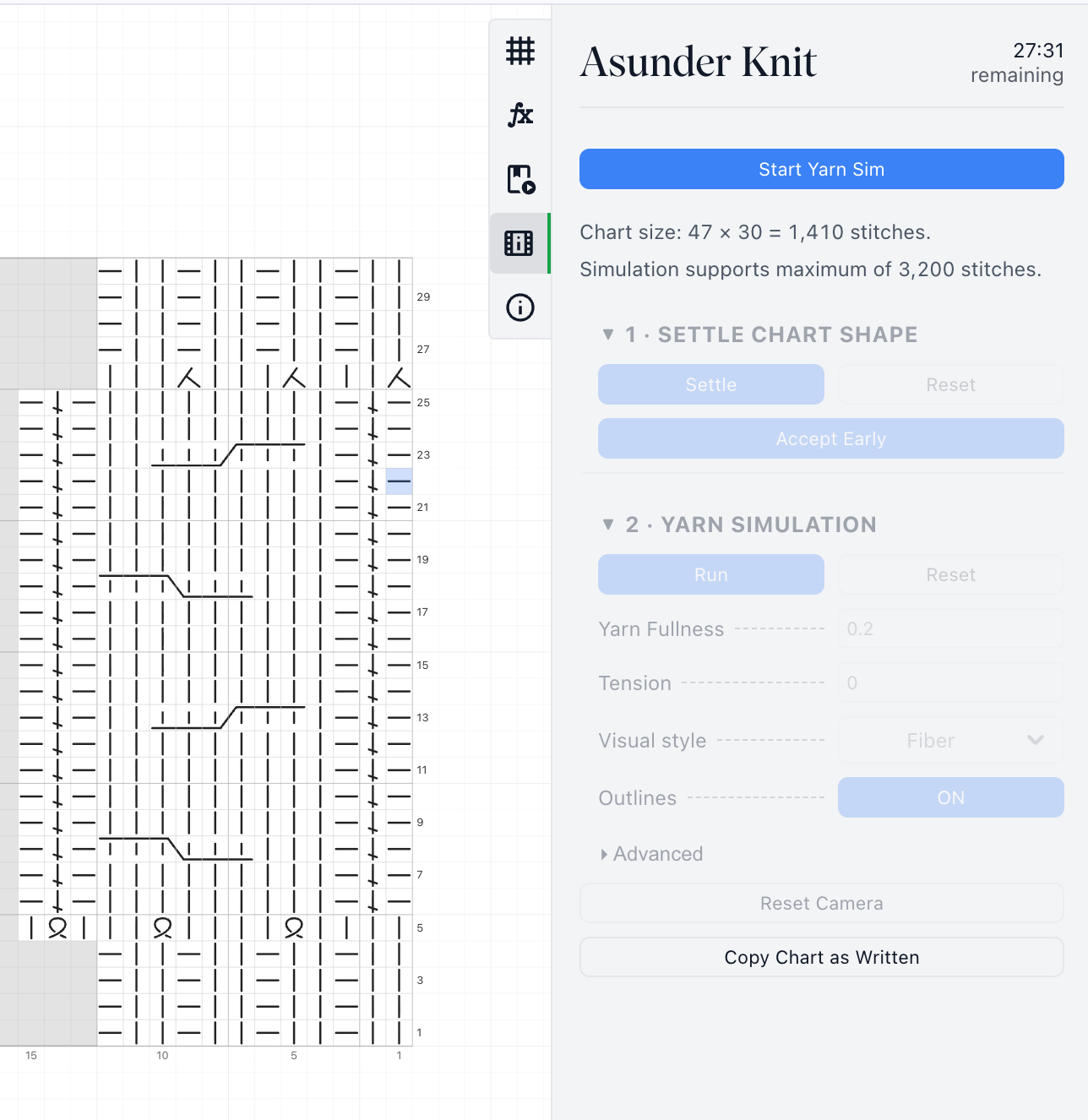
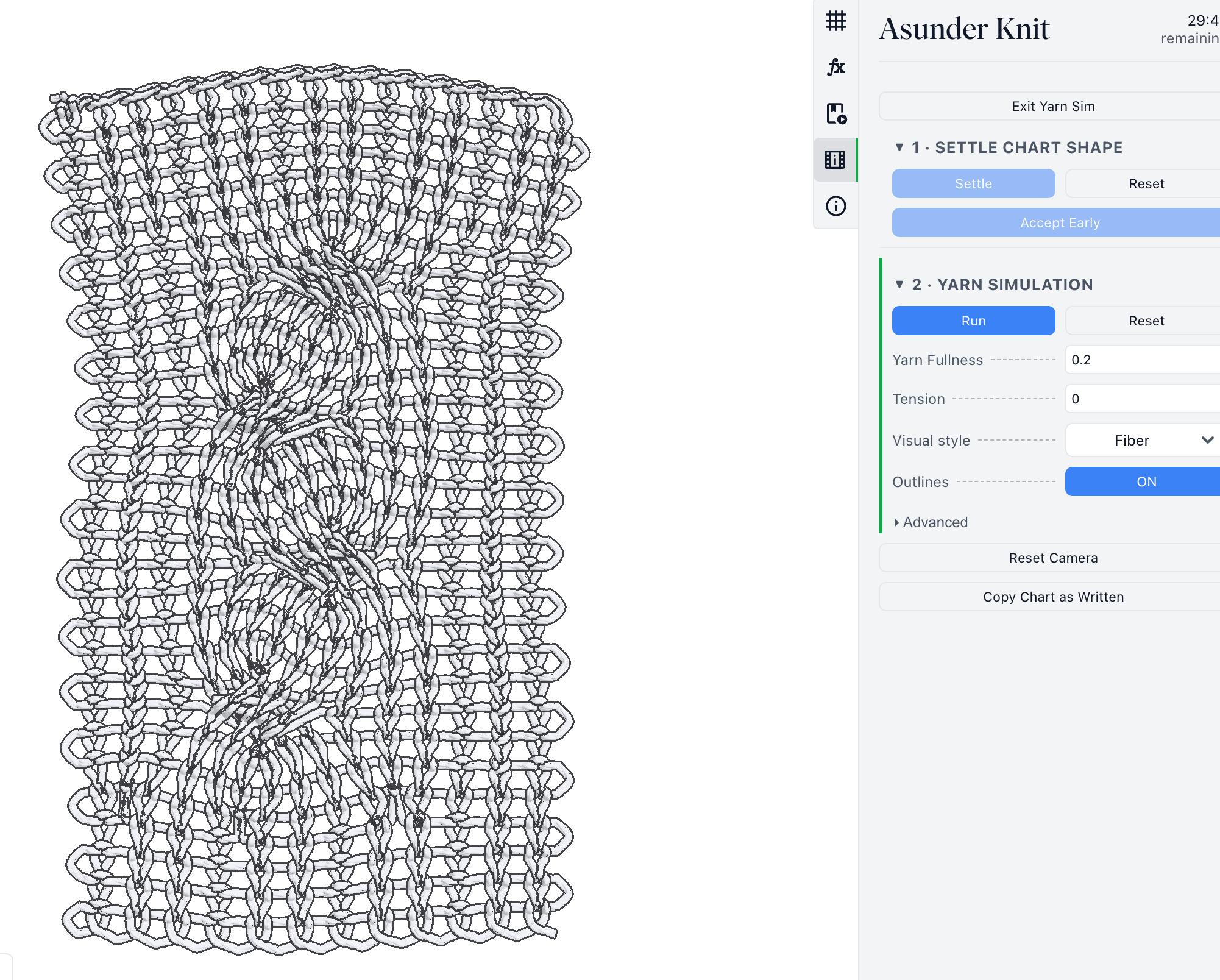
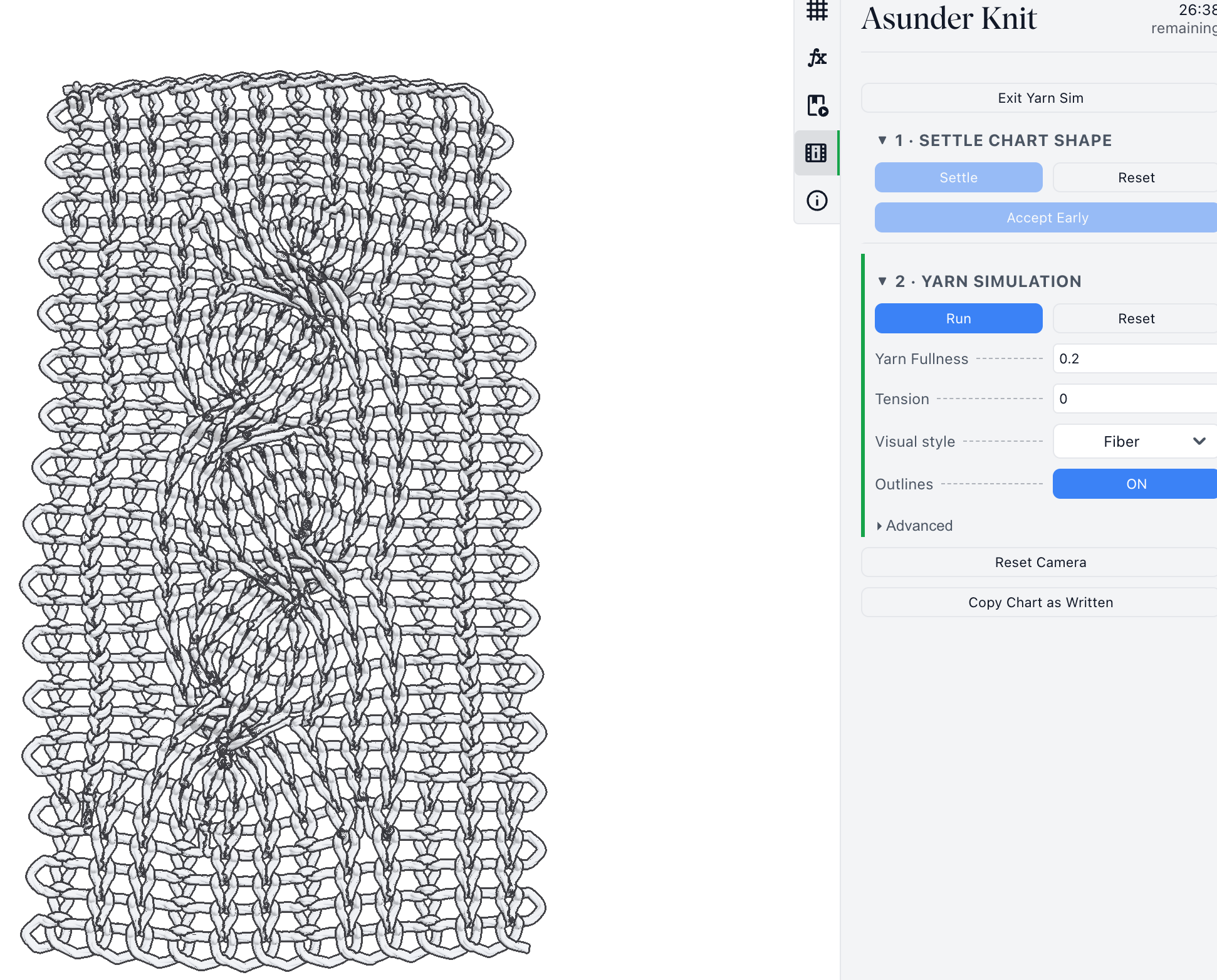
This little bit of experimentation gave me the confidence to dip a toe into designing patterns, which has been so rewarding! I have one successful project, and one not so successful one. But it’s fun to try anyway. I suppose it’s kind of like cooking. When you understand what each ingredient (stitch) contributes, and you know what final product you want to end up with, you can start to figure out exactly what you need to do to get there.
3. Techo Kaigi: planning for planners
We’re not even in the last quarter of the year! But for some reason, September has become the generally agreed upon time when the next year’s planners and journals go on sale. Hobonichi Techo, the planner brand I’ve been using since 2013, begins daily previews of their upcoming lineup in August. If you love stationery, you probably know how fun it is to be caught up and immersed in planner season. You just cannot resist thinking about your current note-taking and journalling practice, what changes you want to make to your system, what you want to get for next year, and it’s just so fun.
❦
To tell you the truth, there were far more things I loved this month than I have space to feasibly discuss (and this post is frankly long enough—that’s what happens when I talk about dogs), so here’s a brief list:
Tiny Bookshop (2025): A game in which you run a book truck in a utopic book-centric village, calming and engaging enough to dampen anxiety.
The Asian Civilisations Museum: Very fun to see the history of this region, how much things have changed, and how some things haven’t (Ancient China mass producing industrial-level quantities of ceramics to meet global demand lol)
A weekend in Jakarta
Wedang Uwuh: An Indonesian drink blend of ginger, sappanwood, nutmeg, cinnamon, clove that felt like it saved my life during an episode of food poisoning (in Singapore, not Indonesia).
This quote by Hu Anyan on writing and enrichment:
“I didn’t feel that I needed to achieve something in writing,” he says – it was simply something that enriched his life.Obituary (2023): An obituary journalist, paid by the piece, starts to kill people for assignments. A hilarious and horrifying premise, but features some of the most excellent, coherent, and consequential plotting in TV since The Terror (2018).
My favourites from the two Flannery O’Connor and Shirley Jackson short story collections I finished this month, but they aren’t in the public domain… Anyway, they are “The River”, “Late Encounter with the Enemy”, “The Honeymoon of Mrs Smith”, and “The Beautiful Stranger”.
Paperman: A very neat little program that overlays the digital equivalent of a matte paper-like screen protector over your desktop to reduce glare and contrast of the screen.
31 August 2026